3D printer lubricant guide: lead screws, linear rails, and what not to oil
Ask ten people on a 3D printing forum what to lubricate on an Ender 3 and you’ll get ten answers, half of them wrong. The confusion is understandable — a modern FDM printer has rolling wheels, sliding rails, spinning screws, and gears that all look like they should be lubricated. Some of them absolutely should be. Some of them will print worse if you touch them with a lubricant. This guide separates the two and names the specific products that belong in your maintenance kit.
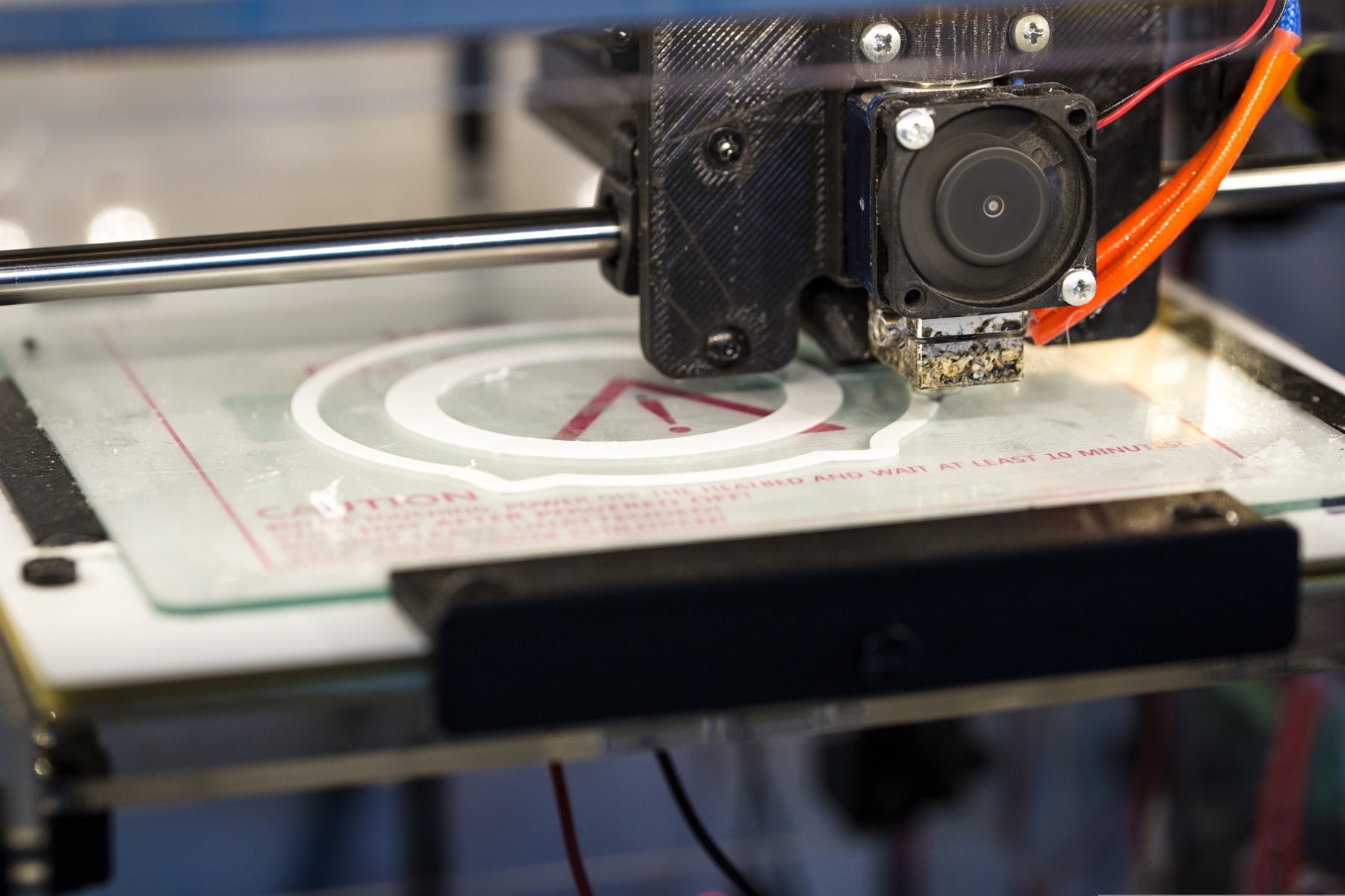
TL;DR: Use PTFE-fortified synthetic grease on lead screws and linear rails. Leave V-slot wheels, stepper motor shafts, and the hotend completely dry. Never use WD-40, lithium grease, or general-purpose motor oil anywhere on a 3D printer.
The 3 Parts That Actually Need Lubrication
1. Lead Screws (the Z axis on most printers)
The vertical threaded rods that drive the Z axis up and down are sliding against a brass or POM nut every layer. On a bed-slinger like the Ender 3 or Prusa MK4, that’s one or two screws; on a CoreXY printer like a Voron 2.4 or Bambu X1, that’s three or four. Dry lead screws cause Z-banding (visible horizontal ridges on print walls), skipped steps, and premature nut wear. A pea-sized dab of synthetic grease spread thin up and down the threads, re-applied every 100–200 print hours, is the single most impactful maintenance habit on any printer with lead screws.
2. Linear Rails and Smooth Rods
MGN9 and MGN12 linear rails (found on Vorons, upgraded Enders, and premium printers) have tiny steel balls circulating inside the carriage. That bearing pack is what wears out, and it’s what you’re lubricating. A light film of the same synthetic grease on the rail surface — pushed into the carriage by a few dry passes back and forth — is all you need. Printers using smooth rods with LM8UU linear bearings (older Prusas, cheap Cartesians) work the same way: the bearing circulates balls over the rod surface, so a thin film of grease on the rod keeps everything quiet and smooth. See all recommended 3D printer lubricants for viscosity guidance by printer type.
3. The Extruder Gear (Sometimes)
Most direct-drive and Bowden extruders don’t need lubrication — the hobbed gear is meant to bite into filament, and any oil contamination can transfer to your prints. However, the small planetary gears inside reduction extruders (Bondtech LGX, E3D Hemera, and some Bambu clones) benefit from a tiny amount of plastic-safe grease during rebuild. Do this only if you’re already inside the extruder for another reason.
What NOT to Lubricate — This Is Where People Break Printers
- V-slot wheels (POM rollers): The Delrin/POM wheels on Ender-style printers are designed to run dry against anodized aluminum. Lubricant attracts dust and turns into grinding paste. If wheels squeak, adjust the eccentric nut — don’t oil them.
- Stepper motor shafts: Steppers are sealed. The shaft runs in a permanently lubricated bearing. Any oil you apply runs down into the coils.
- Belts (GT2/GT3): Rubber-impregnated belts are dry components. Oil degrades the rubber and transfers onto pulleys.
- Hotend, heat break, or nozzle threads: These run at 200–300°C. Anything you apply will burn, smoke, and contaminate filament. Use nickel anti-seize only on nozzle threads if you’re changing them often.
- Bowden tube interior (for filament movement): Some people swear by a sewing-machine oiled feather pulled through, but modern Capricorn-spec PTFE tubes have low enough friction that this is rarely needed and occasionally causes under-extrusion.
By Printer Type: Where to Focus Your Attention
Bed-slingers (Ender 3, Neptune 4, Sovol SV06)
Usually one Z lead screw (sometimes two), Y axis on smooth rods or wheels, X axis on wheels. Focus 90% of your lubrication effort on the Z screw. If your printer has linear rails as an upgrade, add those. Leave everything else dry and adjust wheel tension instead.
Core-XY with linear rails (Voron 2.4, Voron Trident, RatRig)
Three or four Z lead screws + four linear rails (X, Y twin, one or two toolhead). This is where lubrication matters most — these printers print fast, and dry rails or dry screws will show up in your prints immediately. Keep a jar of PTFE grease on the bench.
Premium Cartesian (Prusa MK4, Bambu P1S/X1C)
Prusa ships with their own grease sample and a maintenance reminder in the firmware. Follow their schedule — roughly every 500 hours for the Z screw, every 1,500 hours for linear rods. Bambu’s printers ship under-lubricated from the factory on the MGN rails; a single grease pass at 100 print hours extends bearing life significantly.
Resin printers (Anycubic Mono, Elegoo Saturn)
Resin printers use a single lead screw to raise the build plate. Same PTFE grease, same technique. The lead screw is often exposed to UV and resin vapor, so a cleaning + re-grease every 50 print hours is wise.
Grease or Oil? Picking the Right Viscosity
For every lubrication point on a 3D printer, grease is the right answer for one reason: it stays put. Oil migrates — down the lead screw, onto belts, onto prints. Grease has a carrier that holds the lubricant where you applied it. The exception is tiny bushings in older bed-slingers, where a dab of PTFE oil from a pen-style applicator is easier to place precisely than grease. For everything else, grease wins.
PTFE-fortified (white lithium-free) synthetic grease is the consensus pick on the Voron Discord and r/3Dprinting. Super Lube’s synthetic grease is the product most commonly named in those communities because it’s plastic-safe, won’t attack POM or rubber, and handles the temperature range inside an enclosed CoreXY without thinning.
The Lubricants Worth Owning
Super Lube 21030 Synthetic Grease with PTFE
The most-recommended 3D printer lubricant on Reddit, the Voron Discord, and nearly every maintenance video. PTFE-fortified synthetic, rated -45°F to 450°F, plastic-safe, won’t attack POM. A single 3 oz tube lasts years across multiple printers.
Buy on AmazonSuper Lube Oil with PTFE (Pen Applicator)
Same PTFE chemistry in oil form, delivered by a precision pen. Ideal for LM8UU bearings on older Prusas, extruder idler bearings, and spool holder bearings — places where a grease blob is overkill and migration isn’t a concern.
Buy on AmazonSuper Lube 41160 Synthetic Grease (14.1 oz Tub)
Identical formula to the 21030 tube in a bulk tub. If you run a print farm, maintain a Voron build group, or do 3D printer repair work, the tub is the economical choice. Enough grease to service dozens of printers for years.
Buy on AmazonFinish Line Extreme Fluoro Grease
100% pure PTFE grease in a precision syringe applicator. Originally marketed to cyclists for derailleurs, it’s been adopted by the high-speed CoreXY community for Z lead screws on printers pushing 300 mm/s. Thicker and more shear-resistant than Super Lube — overkill for an Ender, perfect for a Voron running hard.
Buy on AmazonHow to Apply It (Do This Once, Not Every Week)
- Clean first. Wipe old grease off lead screws and rails with a lint-free cloth and isopropyl alcohol. Stacking fresh grease on contaminated grease is how you get a gritty paste that wears faster than dry.
- Apply thin. A pea-sized dab on a lead screw, smeared up and down the thread with a finger. For rails, a thin line on the rail face — the carriage spreads it as it travels.
- Exercise the axis. Manually move the carriage or raise/lower the bed through its full range five times. This works grease into the bearings.
- Wipe excess. Whatever is visible after exercising is waste. Wipe it off — it’ll only fling onto belts and prints otherwise.
- Re-apply every 100–200 print hours, or sooner if you hear new noise.
Common Questions
Can I use WD-40 on my 3D printer?
No. WD-40 is a solvent/water displacer, not a lubricant. It’ll dissolve whatever grease is in your bearings, evaporate within hours, and leave the mechanism dry. WD-40’s own website lists 3D printers among things not to use it on. The “WD-40 Specialist White Lithium” and “PTFE” variants are different products and are acceptable — just not the blue-and-yellow can.
My V-slot wheels squeak. Should I oil them?
No — tighten or loosen the eccentric nut. Squeaking V-wheels are almost always a tension problem (too tight). The fix is mechanical, not lubrication. If the wheels themselves are worn flat, replace them.
How often should I lubricate a Bambu X1 or P1S?
Bambu ships their printers with minimal grease on the MGN rails. A single thin grease pass at the 100-hour mark noticeably quiets the printer and extends rail life. After that, every 500 print hours is enough for most users.
What about the AMS gears or filament-cutter mechanism?
Factory lubrication on Bambu’s AMS is adequate for its entire service life. The filament cutter is a sealed solenoid mechanism — don’t open it. If it fails, replace the module.
Is white lithium grease okay?
No. Lithium grease attacks POM (Delrin) wheels and some rubber components. It also separates at the temperatures inside an enclosed printer. Stick with PTFE synthetic.
Quick Reference
- Ender 3 / bed-slinger: Super Lube 21030 on the Z screw every 150 hours. Leave wheels dry.
- Voron / CoreXY with linear rails: Super Lube 21030 or Finish Line Fluoro on screws and rails every 100 hours of heavy use.
- Prusa MK4: Follow firmware maintenance reminders with included grease or Super Lube equivalent.
- Bambu X1/P1S: One grease pass on MGN rails at 100 hours. Re-apply every 500 hours.
- Resin printer: Clean and re-grease the Z lead screw every 50 print hours.
For a filterable comparison across every 3D printer lubrication task — Bowden tubes, extruder gears, resin Z screws, and more — the full lubricant guide lets you filter by plastic-safety, temperature range, and form factor. The per-item pick for this topic is 3D printer lubrication.
ThePickSmith participates in the Amazon Associates program. Purchases made through links on this page may earn us a commission at no extra cost to you. Product recommendations are based on independent research and not paid placements.